
In educational research, Adamax is administered subcutaneously at doses ranging from 300 micrograms to 1 mg daily. A 10 mg vial reconstituted with antibacterial water yields approximately 3.33 mg per milliliter. This information is for research and educational use only.
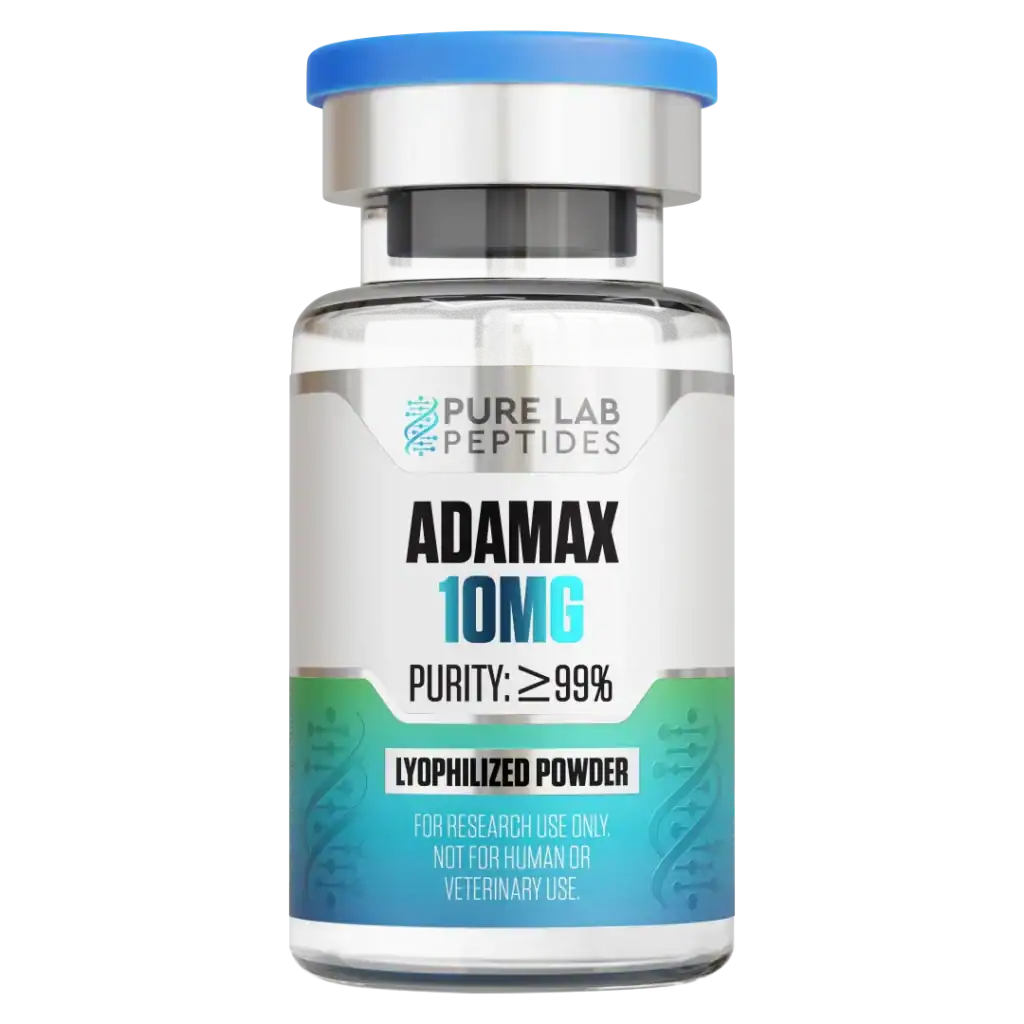
Adamax is an adamantane‑modified analog of Semax (N‑acetyl Semax Amidate), a heptapeptide derivative of ACTH(4–10) studied for nootropic and neuroprotective properties. The adamantane moiety enhances blood–brain barrier penetration and peptide stability, yielding greater potency than standard Semax. This educational protocol presents a once‑daily subcutaneous approach using a practical dilution for clear insulin‑syringe measurements.
| Phase | Daily Dose (mg) | Units (per injection) (mL) |
|---|---|---|
| Weeks 1–2 | 300 µg (0.3 mg) | 9 units (0.09 mL) |
| Weeks 3–4 | 500 µg (0.5 mg) | 15 units (0.15 mL) |
| Weeks 5–6 | 750 µg (0.75 mg) | 23 units (0.23 mL) |
| Weeks 7–8 | 1000 µg (1.0 mg) | 30 units (0.30 mL) |
Frequency: Inject once daily subcutaneously. This schedule uses the largest practical dilution (3.0 mL) to keep per‑injection units readable. For the 300 µg starting dose (9 units = 0.09 mL), consider using 30‑ or 50‑unit insulin syringes for improved readability.
Important: This guide is for educational purposes only and is not medical advice. For research use only. Not for human consumption.
Practical considerations for consistency and safety.
Adamax is structurally derived from Semax, a well‑studied ACTH(4–10) analog with nootropic properties. Semax increases brain‑derived neurotrophic factor (BDNF) expression and enhances TrkB receptor sensitivity in the hippocampus, promoting neuroplasticity, synaptic formation, and neuronal survival. The peptide modulates neurotransmitter systems (dopamine, serotonin) and activates intracellular signaling cascades (cAMP/CREB pathways), leading to improved memory, learning, and stress resilience. Adamax’s adamantane moiety confers greater lipophilicity and enzymatic stability than Semax, enabling more efficient blood–brain barrier crossing and prolonged in vivo half‑life. This structural enhancement amplifies neuroprotective effects and reduces dosing frequency requirements. Preclinical data suggest 2–3 times greater efficacy in cognitive and endurance outcomes compared to standard Semax.
Observations from preclinical literature and Semax clinical studies.
Potential Benefits
We recommend Vitality Labs Peptides for high‑purity Adamax (10 mg).
Explore related research dosage protocols and background reading for BPC-157 + TB-500.