
The BPC-157 + TB-500 peptide blend is dosed at 600 mcg–800 mcg daily via subcutaneous injection in educational protocols. A 10 mg blend reconstituted with bacteriostatic water yields about 3.33 mg/mL. This information is for research and educational use only.
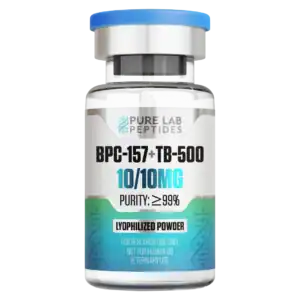
This blend combines two well-studied regenerative peptides: BPC-157 (Body Protection Compound-157), a pentadecapeptide derived from human gastric juice with cytoprotective and wound-healing properties[1][2], and TB-500 (Thymosin Beta-4 fragment), a 43-amino-acid peptide involved in tissue repair, cell migration, and angiogenesis[3][4]. This educational protocol presents a <b>once-daily subcutaneous</b> approach using a practical dilution for clear insulin-syringe measurements.
Educational guide for Research Preparation Information and daily dosing
| Phase / Week | Daily Dose (Total Blend) | Each Peptide (mcg) | Units (mL) |
|---|---|---|---|
| Weeks 1–2 (Initial) | 600 mcg | 300 mcg BPC + 300 mcg TB-500 | 18 units (0.18 mL) |
| Weeks 3–4 (Loading) | 800 mcg | 400 mcg BPC + 400 mcg TB-500 | 24 units (0.24 mL) |
| Weeks 5–8 (Maintenance) | 600 mcg | 300 mcg BPC + 300 mcg TB-500 | 18 units (0.18 mL) |
Research Preparation Information
For acute tissue injuries, some protocols suggest a higher initial loading phase[8][9]. This approach uses higher daily doses during the first 4 weeks before tapering to maintenance. Use with caution; robust human dose-finding data remain limited.
| Phase / Week | Daily Dose (Total Blend) | Each Peptide (mcg) | Units (mL) |
|---|---|---|---|
| Weeks 1–2 (Aggressive Load) | 1000 mcg | 500 mcg BPC + 500 mcg TB-500 | 30 units (0.30 mL) |
| Weeks 3–4 (High Load) | 800 mcg | 400 mcg BPC + 400 mcg TB-500 | 24 units (0.24 mL) |
| Weeks 5–8 (Maintenance) | 600 mcg | 300 mcg BPC + 300 mcg TB-500 | 18 units (0.18 mL) |
Note: A small human case series combining BPC-157 and TB-500 for joint injuries reported improved outcomes at higher combined doses (4 mg BPC + 6 mg TB-500 intra-articular) compared to lower doses[8]. However, systemic subcutaneous protocols typically use the ranges above. Treatment duration is generally limited to 8–12 weeks before cycling off to evaluate response[9].
Important: This guide is for educational purposes only and is not medical advice. For research use only. Not for human consumption.
Plan based on an 8–16 week daily protocol with phased dosing (averaging ~700 mcg/day over the cycle).
Concise summary of the once-daily regimen.
Suggested daily phased approach.
Proper storage preserves peptide quality and stability.
Practical considerations for consistency and safety.
BPC-157 is a stable pentadecapeptide that promotes angiogenesis, modulates nitric oxide pathways, and demonstrates broad cytoprotective effects across gastrointestinal, musculoskeletal, and neurological tissues in preclinical models[1][2]. It has shown activity at very low doses (nanogram to microgram per kilogram) without demonstrable toxicity in animal studies[11].
TB-500 (Thymosin Beta-4) is an actin-sequestering peptide that promotes cell migration, wound healing, and anti-inflammatory responses[3][4]. It is well-tolerated in animal and early clinical studies, even at multi-milligram doses[12].
Combining these peptides may provide complementary mechanisms for tissue repair: BPC-157 for its trophic and anti-inflammatory effects, and TB-500 for enhanced cell migration and angiogenesis[8].
Observations from preclinical and limited clinical literature.
Complementary strategies for optimal recovery outcomes.
General subcutaneous guidance from clinical best-practice resources[6][7].
This content is for educational purposes only and is not medical advice.
Explore related research Research Preparation Information protocols and background reading for BPC-157 + TB-500.
Explore related research Research Information protocols and background reading for BPC-157 + TB-500.