
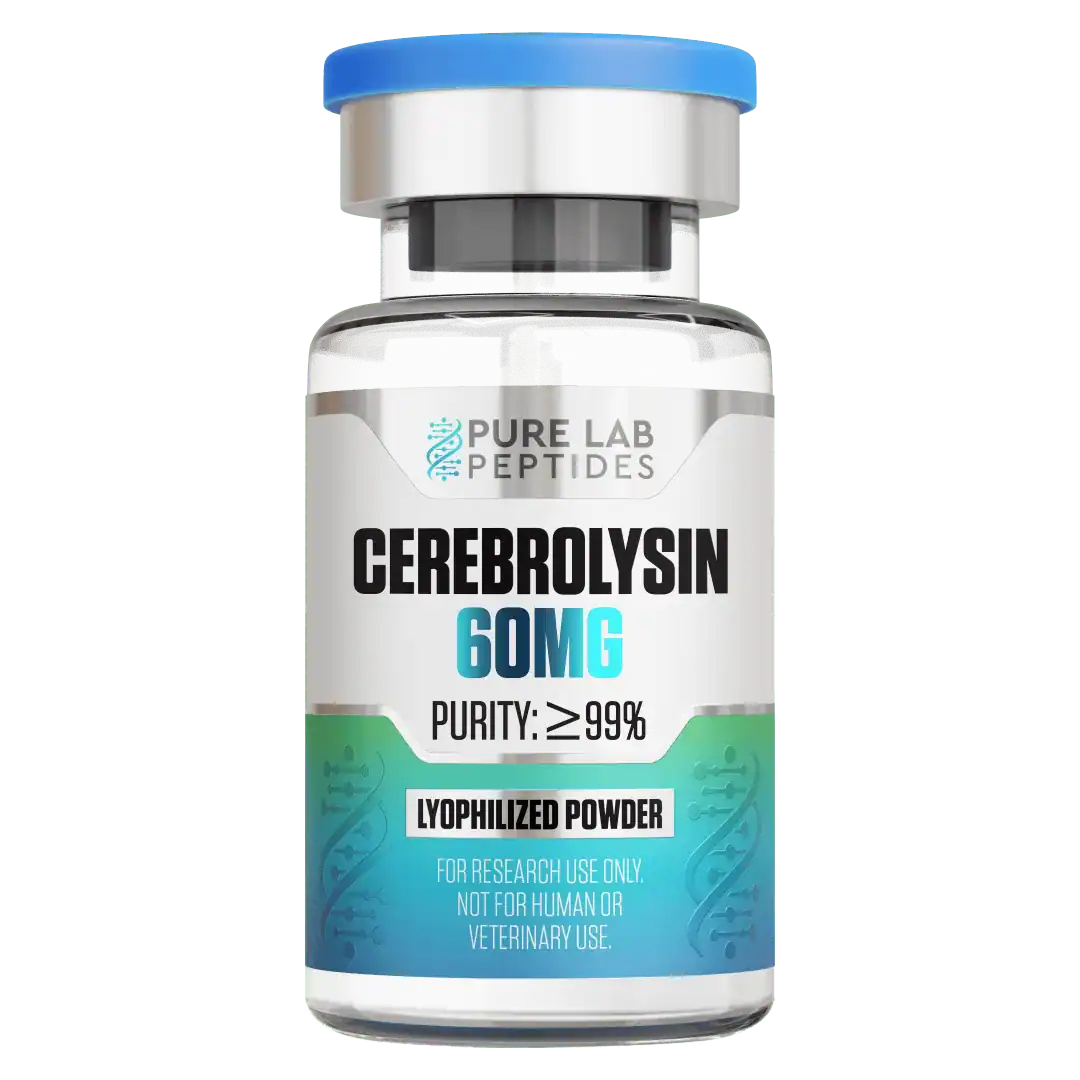
Cerebrolysin is a porcine brain‑derived peptide preparation containing low‑molecular‑weight neuropeptides and free amino acids that crosses the blood–brain barrier to support neuronal survival. It mimics endogenous neurotrophic factors (e.g., NGF, BDNF) and modulates neuroinflammatory mediators. This educational protocol presents a once‑daily subcutaneous approach using a practical dilution for clear insulin‑syringe measurements.
| Phase | Daily Dose (mg) | Units (per injection) (mL) |
|---|---|---|
| Weeks 1 | 20 mg (20,000 mcg) | 100 units (1.0 mL) × 1 |
| Weeks 2 | 24 mg (24,000 mcg) | 60 units (0.6 mL) AM + 60 units (0.6 mL) PM |
| Weeks 3 | 28 mg (28,000 mcg) | 70 units (0.7 mL) AM + 70 units (0.7 mL) PM |
| Weeks 4+ | 32 mg (32,000 mcg) | 80 units (0.8 mL) AM + 80 units (0.8 mL) PM |
Frequency: Inject once or twice daily subcutaneously as shown above. Doses exceeding 100 units (1.0 mL) should be split into AM and PM administrations. Clinical literature describes daily doses ranging from 215 mg (1 mL of commercial solution) up to higher IV infusions[1]; this protocol uses a conservative subcutaneous approach with gradual titration.
Reconstitution Steps
Important: This guide is for educational purposes only and is not medical advice. For research use only. Not for human consumption.
Cerebrolysin is a multicomponent peptide preparation derived from porcine brain tissue, containing biologically active neuropeptides and amino acids with molecular weights below 10 kDa. This low molecular weight allows it to cross the blood–brain barrier and exert neurotrophic effects similar to endogenous factors like nerve growth factor (NGF) and brain‑derived neurotrophic factor (BDNF). Preclinical studies demonstrate neuroprotective effects including reduced infarct size and improved recovery in ischemia models. Human trials have examined its use in stroke, dementia, and traumatic brain injury with mixed but generally favorable tolerability profiles.