
BPC-157 (10 mg Vial) Dosage Protocol

BPC-157 Dosage Chart

BPC-157 is dosed at 200 mcg–600 mcg daily via subcutaneous injection in educational protocols. A 10 mg vial reconstituted with bacteriostatic water yields about 3.33 mg/mL. This information is for research and educational use only.
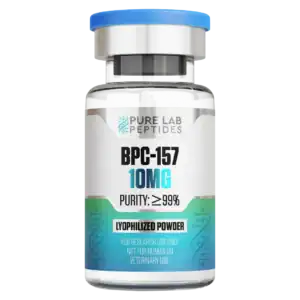
BPC-157 (Body Protection Compound-157) is a synthetic 15-amino-acid peptide derived from a gastric protein sequence studied for tissue-healing and cytoprotective properties. Preclinical models demonstrate accelerated wound repair and anti-inflammatory activity, though human clinical data remain limited to early-phase safety trials and small case reports. This educational protocol presents a once-daily subcutaneous approach using a practical dilution for clear insulin-syringe measurements.

Educational guide for reconstitution and daily dosing

Standard / Gradual Approach (3 mL = ~3.33 mg/mL)

PhaseDaily Dose (mg)Units (per injection) (mL)
Weeks 1–2200 mcg (0.2 mg)6 units (0.06 mL)
Weeks 3–4400 mcg (0.4 mg)12 units (0.12 mL)
Weeks 5–8+600 mcg (0.6 mg)18 units (0.18 mL)

Frequency: Inject once daily subcutaneously. This schedule uses the largest practical dilution (3.0 mL) to keep per-injection units well above 5 for better accuracy. Dosing is extrapolated from preclinical models; human clinical validation remains limited.

Reconstitution Steps
Important: This guide is for educational purposes only and is not medical advice. For research use only. Not for human consumption.
Plan based on an 8–16 week daily protocol with gradual titration.
Concise summary of the once-daily regimen.
Suggested daily titration approach.

Proper storage preserves peptide quality.

Practical considerations for consistency and safety.

BPC-157 is a synthetic peptide corresponding to a partial sequence of human gastric juice protein. Preclinical studies suggest it modulates nitric oxide pathways and growth-factor expression to promote angiogenesis and collagen deposition in damaged tissues. Animal models report accelerated healing of gut, tendon, ligament, and muscle injuries. A Phase I oral safety trial has been completed, and a small human case series reported improvements following intra-articular administration; however, large-scale controlled human efficacy data are not yet available.

Observations from preclinical and early clinical literature.
Complementary strategies for best outcomes.

General subcutaneous guidance from clinical best-practice resources.

We recommend Vitality Labs Peptides for high-purity 5-Amino-1MQ (10 mg).

Why Vitality Labs Peptides?

This content is for educational purposes only and is not medical advice, diagnosis, or treatment. BPC-157 remains investigational with limited human clinical data. For research use only. Not for human consumption.

Explore related research dosage protocols and background reading for BPC-157 + TB-500.

Journal of Pharmacological Sciences

— Klicek R et al. BPC-157 promotes colocutaneous fistula healing via NO-system modulation (rat model)

Pharmaceuticals (MDPI)

— Józwiak M et al. Multifunctionality and possible medical application of BPC-157: literature and patent review (2025)

Current Pharmaceutical Design (PMC)

— Sikiric P et al. BPC-157 stable gastric pentadecapeptide: novel therapy for wound healing and tissue repair

Life Sciences

— Seiwerth S et al. BPC-157 and standard angiogenic growth factors: gastrointestinal tract healing and beyond

HSS Journal (PubMed)

— Vasireddi N et al. Emerging use of BPC-157 in orthopaedic sports medicine: systematic review (2025)

Journal of Orthopaedic Research

— Chang CH et al. BPC-157 promotes tendon-to-bone healing in a rat rotator cuff model

WHO (NCBI Bookshelf)

— Guideline on safety-engineered syringes for IM, ID, and SC injections in health care settings (2016)

Johns Hopkins Arthritis Center

— How to give a subcutaneous injection (patient education resource)

ClinicalTrials.gov

— NCT02637284: PCO-02 Phase I safety and pharmacokinetics trial of oral BPC-157

CDC

— Vaccine administration: subcutaneous route (angle/site; no aspiration)

Subcutaneous Drug Injection Review (PMC)

— Pharmacologic considerations of the subcutaneous route

World Journal of Gastroenterology (PMC)

— Sikiric P et al. Pentadecapeptide BPC-157: from GI tract to whole body healing

Vitality Lab Peptides

— BPC-157 (10 mg) product page (quality and batch documentation) View Source