
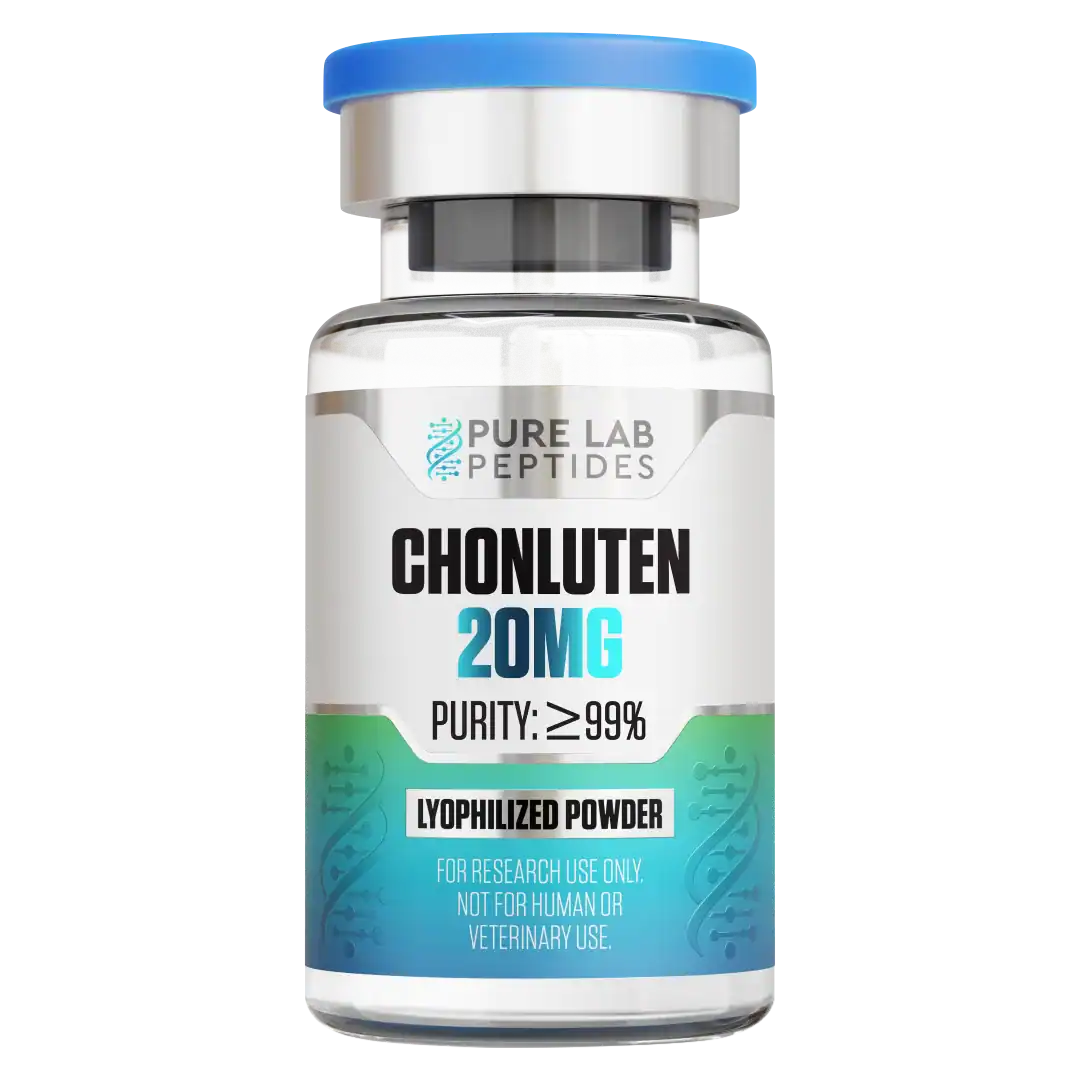
Chonluten is a short bioregulatory tripeptide (Glu‑Asp‑Gly) studied for its effects on bronchopulmonary tissue and inflammatory pathways in monocyte/macrophage cell models. As a small peptide with poor oral stability, subcutaneous injection is the indicated parenteral route. This educational protocol presents a once‑daily subcutaneous approach using a practical dilution for clear insulin‑syringe measurements.
| Week/Phase | Dose per Peptide (mcg / mg) | Units (mL) |
|---|---|---|
| Weeks 1–2 | 250 mcg (0.25 mg) | 3.75 units (0.0375 mL) |
| Weeks 3–4 | 500 mcg (0.5 mg) | 7.5 units (0.075 mL) |
| Weeks 5–6 | 1,000 mcg (1 mg) | 15 units (0.15 mL) |
| Weeks 7–8 | 1,500 mcg (1.5 mg) | 22.5 units (0.225 mL) |
| Weeks 9–10 | 2,000 mcg (2 mg) | 30 units (0.30 mL) |
| Weeks 11–12 | 3,000 mcg (3 mg) | 45 units (0.45 mL) |
| Weeks 13–14 | 4,000 mcg (4 mg) | 60 units (0.60 mL) |
| Weeks 15–16 | 4,000 mcg (4 mg) | 60 units (0.60 mL) |
Frequency: Inject once daily subcutaneously. For ≤10‑unit (≤0.10 mL) administrations during Weeks 1–4, consider 30‑ or 50‑unit insulin syringes for improved readability.
Reconstitution Steps
Important: This guide is for educational purposes only and is not medical advice. For research use only. Not for human consumption.
Chonluten (Glu‑Asp‑Gly) is a short bioregulatory peptide studied within the Khavinson peptide bioregulator framework targeting bronchopulmonary tissues. In vitro research using monocyte/macrophage (THP‑1) cell models indicates Chonluten may modulate proliferative activity and inflammatory pathways at concentrations in the nanomolar range. Short peptides such as Chonluten typically exhibit poor oral bioavailability due to enzymatic degradation and limited mucosal permeability, supporting subcutaneous administration as the preferred route.
General subcutaneous guidance from clinical best‑practice resources