
Tirzepatide is dosed at 2.5 mg–10 mg weekly via subcutaneous injection in educational protocols. A 15 mg vial reconstituted with bacteriostatic water yields about 7.5 mg/mL. This information is for research and educational use only.
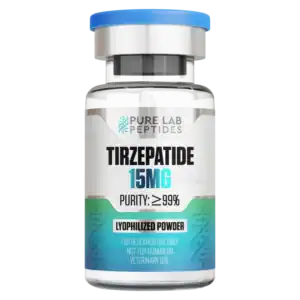
Tirzepatide is a 39–amino acid dual incretin receptor agonist that activates both GLP‑1 and GIP receptors, enhancing glucose‑dependent insulin secretion, suppressing glucagon, slowing gastric emptying, and reducing appetite. Its ~5‑day half‑life allows convenient once‑weekly subcutaneous dosing. Clinical trials demonstrate superior glycemic control and weight reduction compared to selective GLP‑1 agonists.
Research context: For evidence on mechanisms, human and preclinical research, limitations, and safety.
Educational guide for reconstitution and daily dosing
| Phase | Weekly Dose (mg) | Units (per injection) (mL) |
|---|---|---|
| Weeks 1–4 | 2.5 mg | 33 units (0.33 mL) × 1 injection |
| Weeks 5–8 | 5 mg | 67 units (0.67 mL) × 1 injection |
| Weeks 9–12 | 7.5 mg | 100 units (1.0 mL) × 1 injection |
| Weeks 13–16 | 10 mg | 67 units (0.67 mL) × 2 injections |
Frequency: Inject once weekly subcutaneously on the same day each week. For doses requiring multiple injections, administer consecutively at different sites. Dose increases occur every 4 weeks to minimize gastrointestinal side effects. Higher doses (12.5–15 mg/week) may be used in subsequent phases if tolerated and clinically indicated.
Reconstitution Steps
Important: This guide is for educational purposes only and is not medical advice. For research use only. Not for human consumption.
Plan based on an 8–16 week protocol with gradual titration (once‑weekly dosing).
Concise summary of the once‑weekly regimen.
Suggested weekly titration approach.
Proper storage preserves peptide quality and efficacy.
Practical considerations for consistency and safety.
Tirzepatide is a novel dual agonist that simultaneously activates GLP‑1 (glucagon‑like peptide‑1) and GIP (glucose‑dependent insulinotropic polypeptide) receptors. This dual mechanism enhances glucose‑dependent insulin secretion while suppressing glucagon release, slowing gastric emptying, and promoting satiety through central appetite regulation. The added GIP activity appears to synergistically amplify metabolic effects beyond GLP‑1 alone, contributing to superior weight reduction observed in clinical trials. Its ~5‑day half‑life enables convenient once‑weekly administration.
Observations from clinical trials and published literature.
Complementary strategies for best outcomes.
General subcutaneous guidance from clinical best‑practice resources.
This content is for educational purposes only and is not medical advice.
Explore related research dosage protocols and background reading for Tesamorelin.