
Thymosin Alpha-1 is dosed at 300 mcg–500 mcg daily via subcutaneous injection in educational protocols. A 5 mg vial reconstituted with bacteriostatic water yields about 1.67 mg/mL. This information is for research and educational use only.
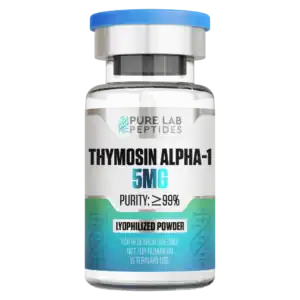
Thymosin Alpha-1 (Tα1) is a 28–amino acid peptide originally isolated from the thymus gland, recognized for its broad immunomodulatory properties. It has been investigated as an immune enhancer in chronic viral infections (hepatitis B/C, HIV/AIDS) and critical illness (sepsis, COVID-19). This educational protocol presents a once‑daily subcutaneous approach using a practical dilution for clear insulin‑syringe measurements.
Research context: For evidence on mechanisms, human and preclinical research, limitations, and safety.
Educational guide for reconstitution and daily dosing
Route: Subcutaneous injection | Frequency: Once daily
| Week | Daily Dose (mcg) | Units (per injection) (mL) |
|---|---|---|
| Week 1 | 300 mcg (0.3 mg) | 18 units (0.18 mL) |
| Weeks 2–8 | 500 mcg (0.5 mg) | 30 units (0.30 mL) |
Frequency: Inject once daily subcutaneously. This 8‑week protocol begins at 300 mcg to assess tolerance, then increases to a maintenance dose of 500 mcg daily from Week 2 onward. The 500 mcg daily dose yields ~3.5 mg/week, consistent with clinical dosing ranges. Treatment durations of 8–16 weeks are commonly reported in literature.
Reconstitution Steps
Important: This guide is for educational purposes only and is not medical advice. For research use only. Not for human consumption.
Concise summary of the once-daily regimen.
Suggested daily titration approach.
Proper storage preserves peptide quality.
Practical considerations for consistency and safety.
Thymosin Alpha-1 is a naturally occurring thymic peptide that modulates immune function through multiple pathways. It enhances the maturation and differentiation of T‑cells, augments dendritic cell function, and promotes the production of key cytokines including interferon‑α and interleukin‑2. Clinical studies have demonstrated Tα1’s ability to enhance immune responses in immunocompromised individuals, including those with chronic hepatitis B and C infections. Meta-analyses have also shown benefit in reducing mortality in moderate-to-critical COVID-19 patients.
Observations from preclinical and clinical literature.
Complementary strategies for best outcomes.
General subcutaneous guidance from clinical best‑practice resources
This content is for educational purposes only and is not medical advice.
Explore related research dosage protocols and background reading for BPC-157 + TB-500.
— Thymalfasin (Zadaxin) clinical overview: 1.6 mg SC twice weekly for hepatitis B treatment
— Safety data: Tα1 doses up to 16 mg SC for 12 months showed no significant toxicity
Explore related research dosage protocols and background reading for Thymosin Alpha-1 (5 mg Vial)